
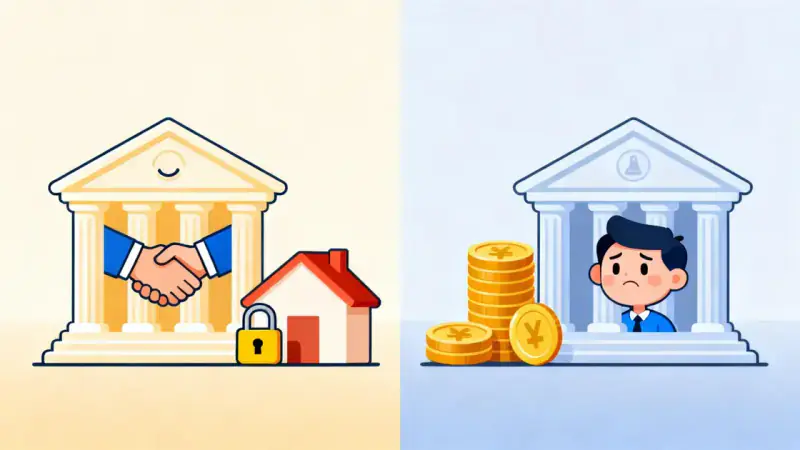
When you need extra money, whether for a major purchase, debt consolidation, or an unexpected expense—loans can be a useful financial tool. However, not all loans are the same. One of the most important distinctions to understand is the difference between secured and unsecured loans.
Choosing the right type of loan can significantly impact your financial health, affecting everything from interest rates to risk levels. Understanding how each option works will help you make smarter, more confident decisions.
In this article, we’ll break down the differences between secured and unsecured loans, their advantages and disadvantages, and how to determine which one is best for your situation.
What Is a Secured Loan?
A secured loan is a type of loan that requires collateral. Collateral is an asset you pledge to the lender as a guarantee that you will repay the loan.
Common examples of secured loans include:
- Home mortgages (secured by the property)
- Auto loans (secured by the vehicle)
- Secured personal loans
If you fail to repay the loan, the lender has the legal right to take your collateral to recover their losses.
Advantages of Secured Loans
Secured loans offer several benefits, especially for borrowers who need larger amounts or lower interest rates.
- Lower interest rates: Because the lender takes less risk, secured loans usually have lower interest rates.
- Higher borrowing limits: You may be able to borrow more money compared to unsecured loans.
- Easier approval: Even borrowers with lower credit scores may qualify.
These advantages make secured loans appealing for large, long-term financial needs.
Disadvantages of Secured Loans
While secured loans offer benefits, they also come with risks.
- Risk of losing assets: If you default, you could lose your home, car, or other collateral.
- Longer approval process: Evaluating collateral can take time.
- Limited flexibility: The loan is often tied to a specific purpose.
It’s important to carefully consider whether you’re comfortable putting your assets at risk.
What Is an Unsecured Loan?
An unsecured loan does not require collateral. Instead, lenders rely on your creditworthiness—your credit score, income, and financial history—to determine your eligibility.
Common examples of unsecured loans include:
- Credit cards
- Personal loans
- Student loans
Because there is no collateral involved, the lender assumes more risk.
Advantages of Unsecured Loans
Unsecured loans are popular due to their simplicity and lower risk to the borrower.
- No collateral required: You don’t risk losing personal assets.
- Faster approval: The process is typically quicker and more straightforward.
- Flexible use: Funds can often be used for various purposes.
This makes unsecured loans a convenient option for smaller or short-term financial needs.
Disadvantages of Unsecured Loans
Despite their convenience, unsecured loans also have some drawbacks.
- Higher interest rates: Lenders charge more to compensate for increased risk.
- Lower borrowing limits: You may not qualify for large amounts.
- Stricter approval requirements: A good credit score is usually necessary.
These factors can make unsecured loans more expensive over time.
Key Differences Between Secured and Unsecured Loans
Understanding the main differences helps you choose the right option:
- Collateral: Secured loans require it; unsecured loans do not.
- Interest rates: Secured loans are generally cheaper.
- Risk: Secured loans carry asset risk; unsecured loans do not.
- Approval: Secured loans may be easier to obtain with poor credit.
Each type serves different financial needs and situations.
When a Secured Loan Might Be the Better Choice
A secured loan may be the best option if:
- You need a large loan amount
- You want lower interest rates
- You have valuable assets to use as collateral
- Your credit score is not strong
However, you must be confident in your ability to repay the loan to avoid losing your assets.
When an Unsecured Loan Might Be the Better Choice
An unsecured loan may be more suitable if:
- You don’t want to risk your assets
- You need quick access to funds
- You have a strong credit profile
- Your loan amount is relatively small
This option is ideal for short-term needs and flexibility.
Factors to Consider Before Choosing
Before deciding between secured and unsecured loans, consider the following:
- Your credit score and financial history
- The amount of money you need
- Your ability to repay the loan
- The level of risk you are willing to take
- The total cost of the loan, including interest and fees
Taking the time to evaluate these factors can prevent costly mistakes.
Tips for Borrowing Responsibly
No matter which type of loan you choose, responsible borrowing is essential.
- Only borrow what you truly need
- Read and understand all loan terms
- Make payments on time
- Avoid taking on multiple debts at once
Good borrowing habits protect your financial health and improve your credit over time.
Making the Right Choice for Your Financial Future
Both secured and unsecured loans have their place in personal finance. The best option depends on your individual situation, goals, and risk tolerance.
Secured loans can offer lower costs and higher limits but come with greater risk. Unsecured loans provide flexibility and safety but may be more expensive.
By understanding the differences and evaluating your needs carefully, you can choose the loan that aligns with your financial goals and supports your long-term stability.
Ultimately, the right decision is one that helps you move forward without putting your financial future at unnecessary risk.